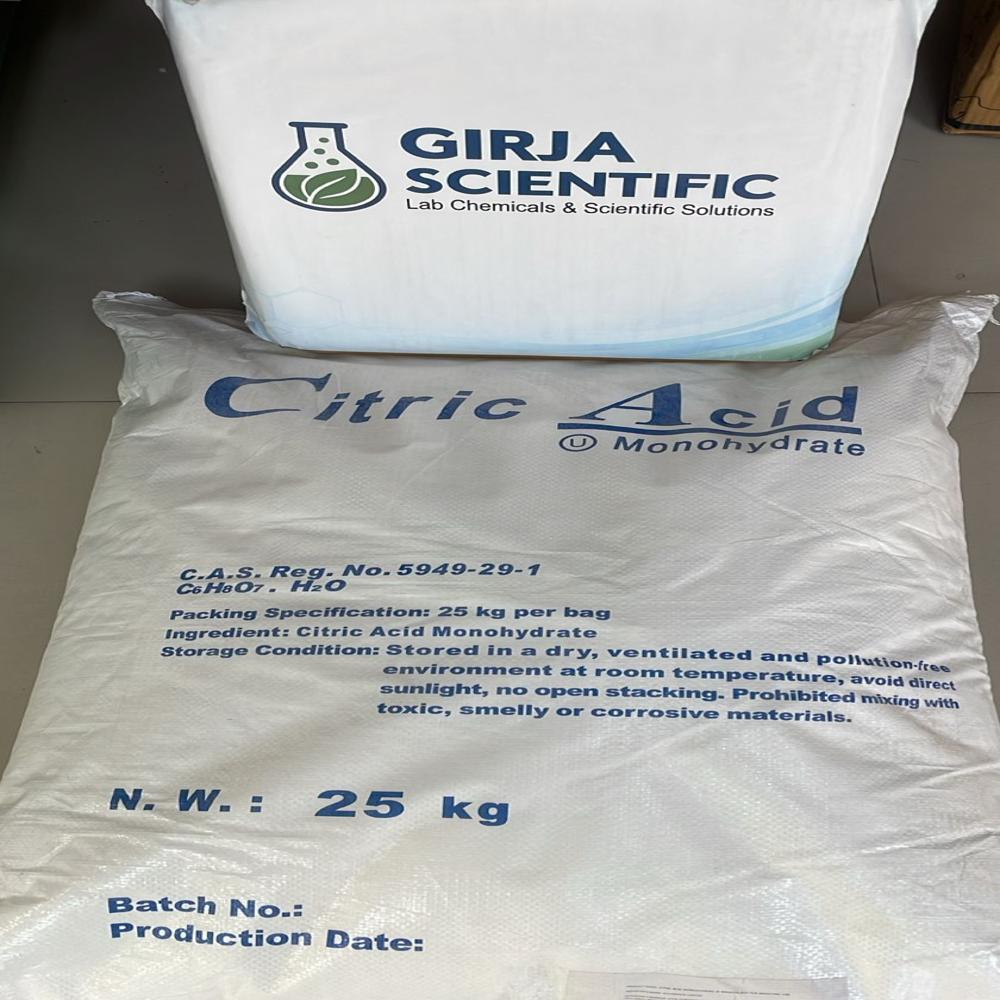
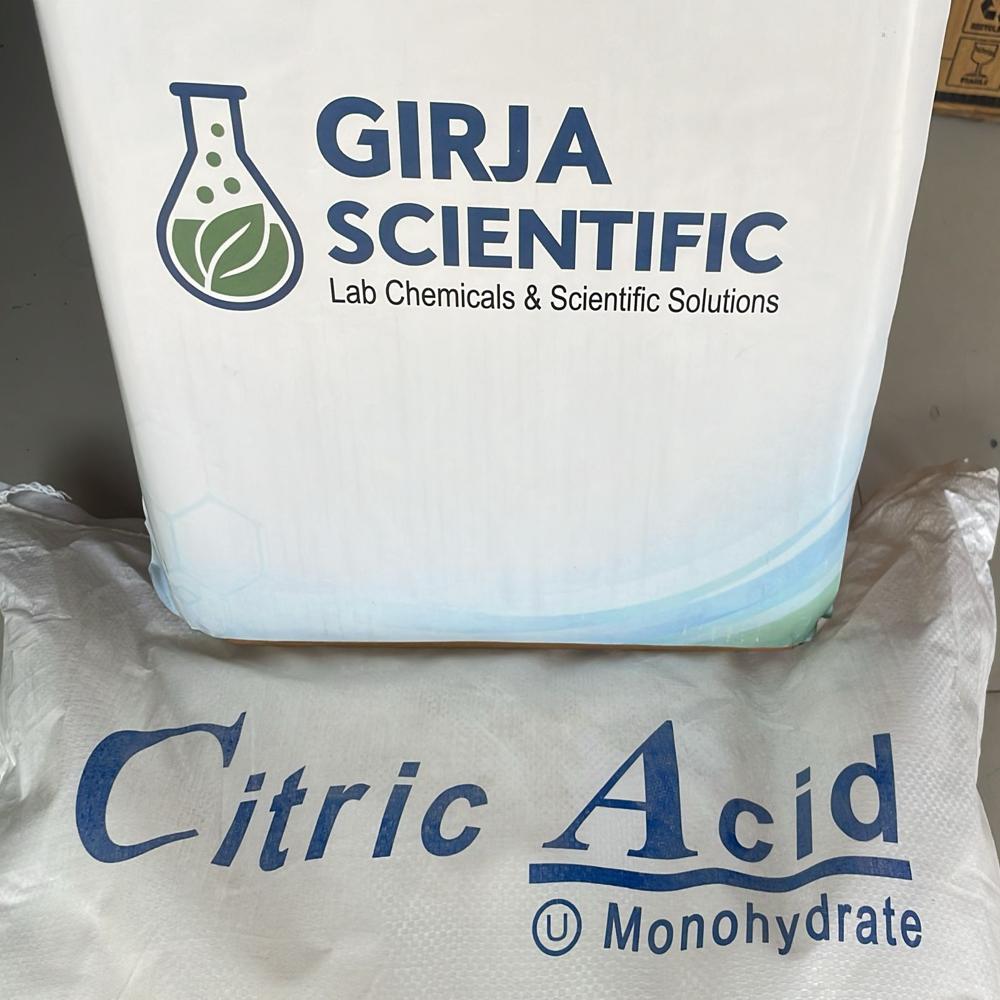
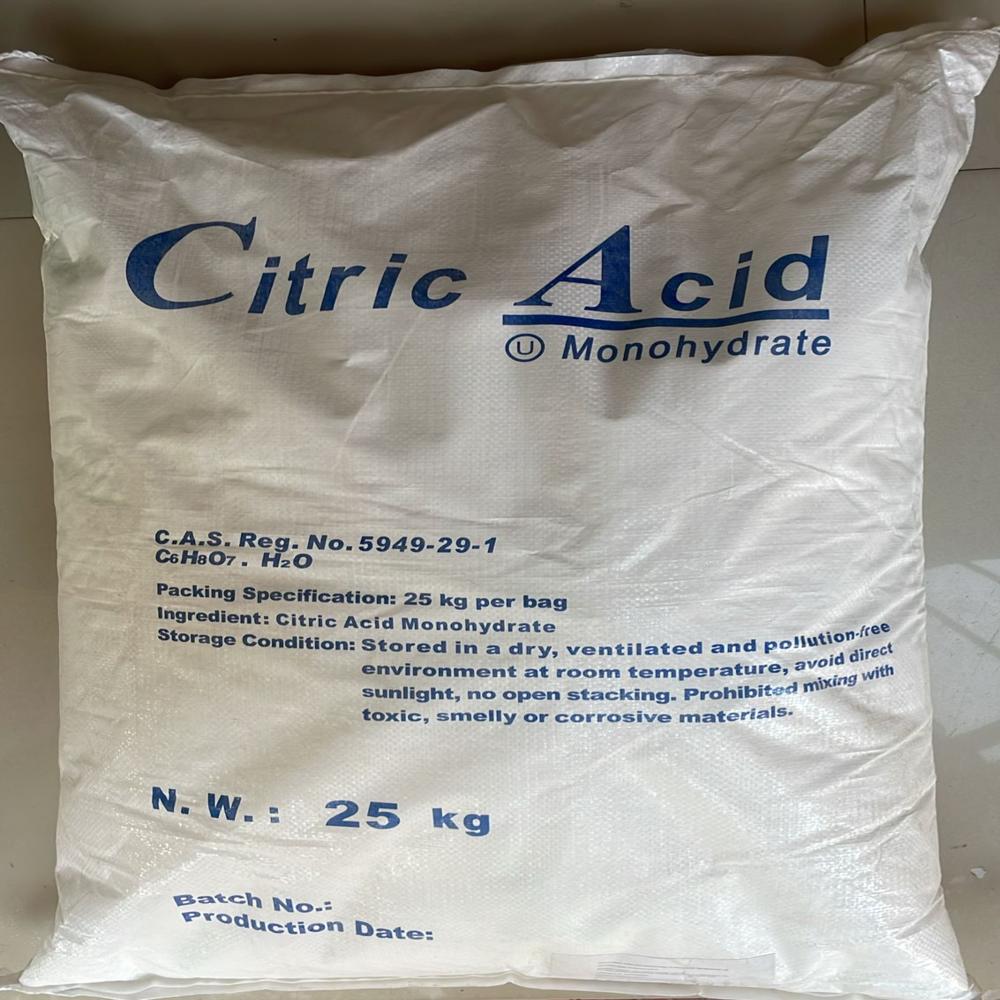
About Citric acid MONOHYDRATE (food preservative)
It is a highly versatile, naturally occurring acid primarily used as a food preservative and flavoring agent. Globally, its applications span food and beverage manufacturing, pharmaceuticals, cosmetics, and household cleaning due to its ability to balance pH, act as a chelating agent, and provide a tart taste..
Versatile Preservation and Acidity RegulationCitric Acid Monohydrate acts as both a preservative and acidity regulator, making it indispensable in food and beverage processing. Its strong acidic profile not only enhances flavor but also helps protect against spoilage, ensuring products stay fresh longer without losing quality.
Highest Purity and Safety StandardsWith a minimum purity of 99.5% and certified food-grade quality, this citric acid meets strict safety guidelines-containing very low levels of lead, arsenic, and heavy metals. The product is not classified as hazardous and is suitable for diverse applications, including pharmaceuticals and cosmetics.
Simple Storage and Long Shelf LifeThe recommended storage for Citric Acid Monohydrate is in a sealed container, away from moisture and heat, allowing for a stable shelf life of 24 months. This extends usability, minimizes waste, and keeps it ready for immediate addition to your production processes.
FAQ's of Citric acid MONOHYDRATE (food preservative):
Q: How should Citric Acid Monohydrate be stored for maximum shelf life?
A: Citric Acid Monohydrate should be kept in a sealed container in a dry, cool area to avoid absorption of moisture. This ensures it maintains its quality and efficacy for up to 24 months.
Q: What benefits does Citric Acid Monohydrate offer as a food preservative?
A: This product inhibits the growth of spoilage-causing microorganisms and stabilizes acidity, helping to extend the shelf life of food and beverage items while preserving their taste and freshness.
Q: Where can Citric Acid Monohydrate be applied?
A: It is widely used in food and beverage processing, pharmaceuticals, and cosmetics, functioning as a preservative, acidity regulator, stabilizer, and pH adjuster.
Q: What is the typical process for using Citric Acid Monohydrate in recipes?
A: Simply dissolve the crystalline powder or granules into water or directly mix it with your food or beverage formulations. Its high solubility ensures seamless integration in most applications.
Q: When should Citric Acid Monohydrate be added during food production?
A: Citric Acid Monohydrate is generally added during the mixing or blending phase to guarantee even distribution and optimum preservation or flavor enhancement.
Q: What is the purity and assay range of this Citric Acid Monohydrate?
A: The product maintains a purity of at least 99.5%, with an assay range from 99.5% to 100.5%, ensuring reliable and consistent quality for sensitive applications.
Q: Is Citric Acid Monohydrate safe for food use?
A: Yes, it is certified as food grade, meets stringent limits for contaminants like lead and arsenic, and is not classified as hazardous, making it safe for use in consumable products.




 Send Inquiry


 Send Inquiry