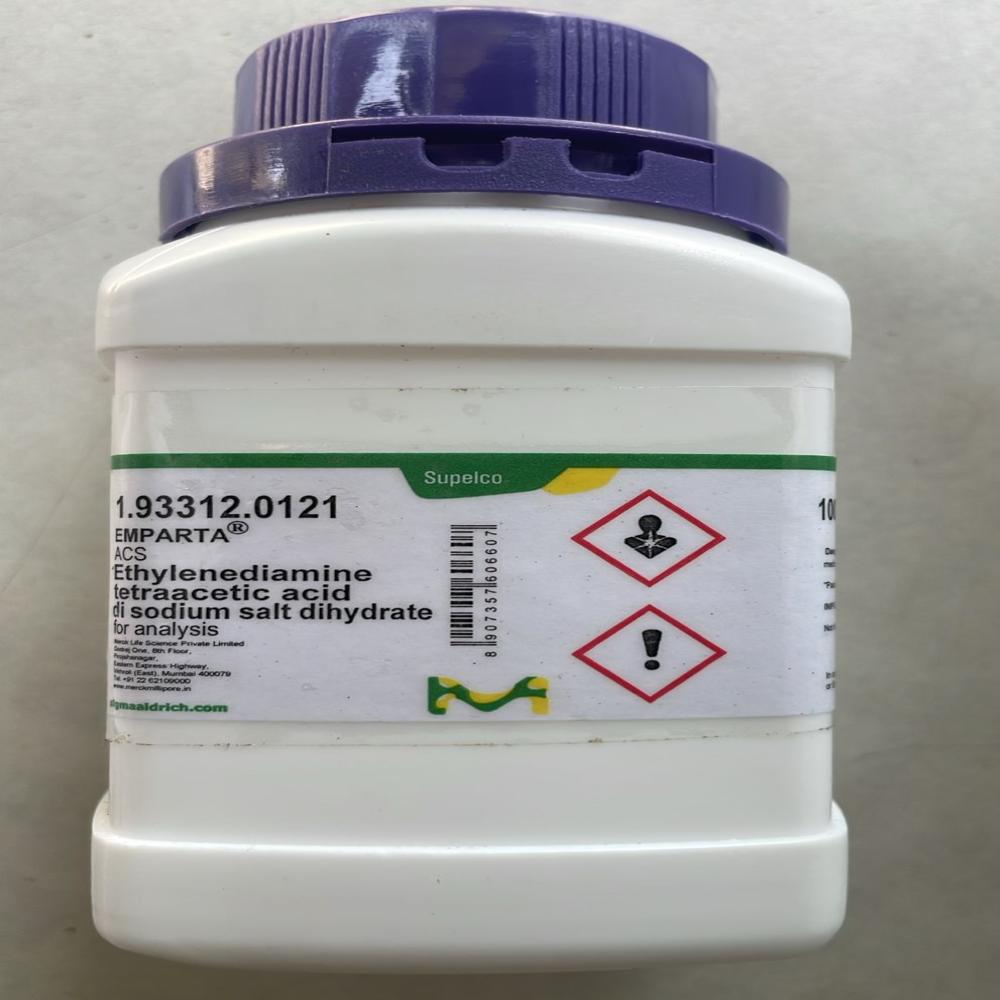
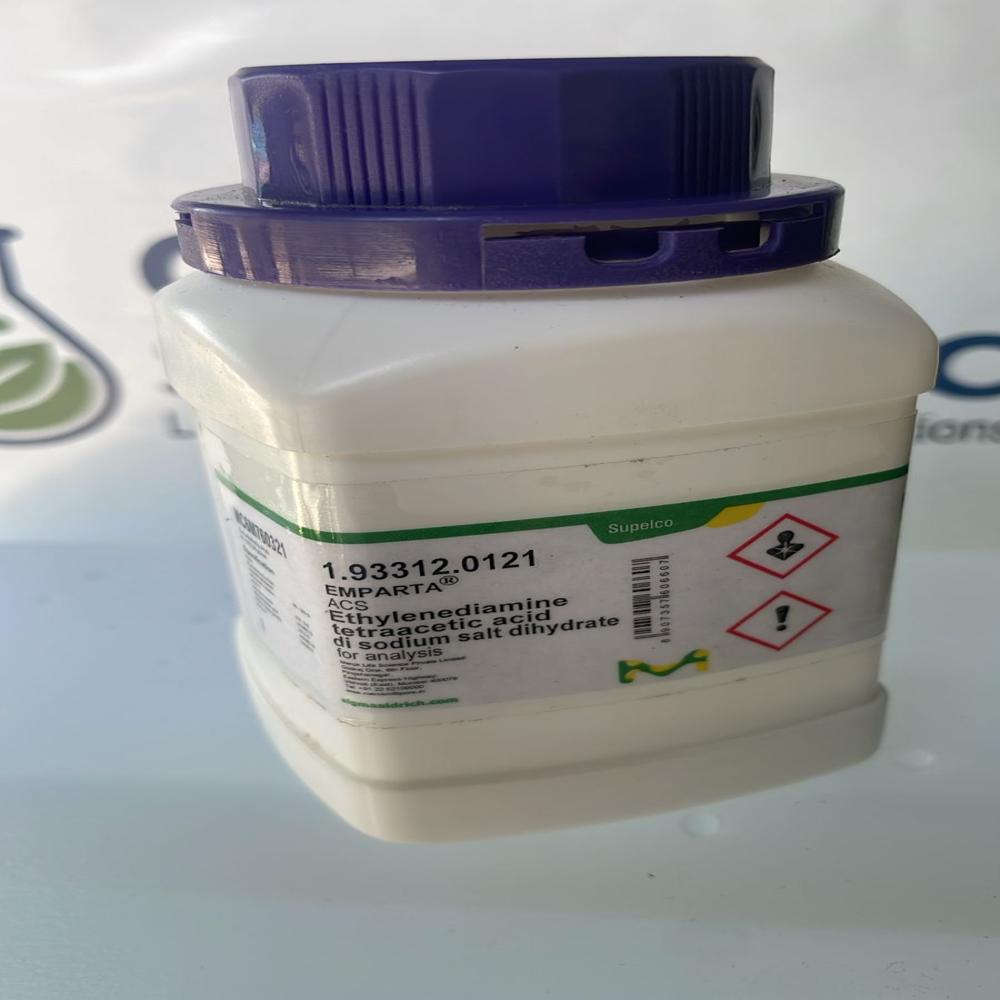
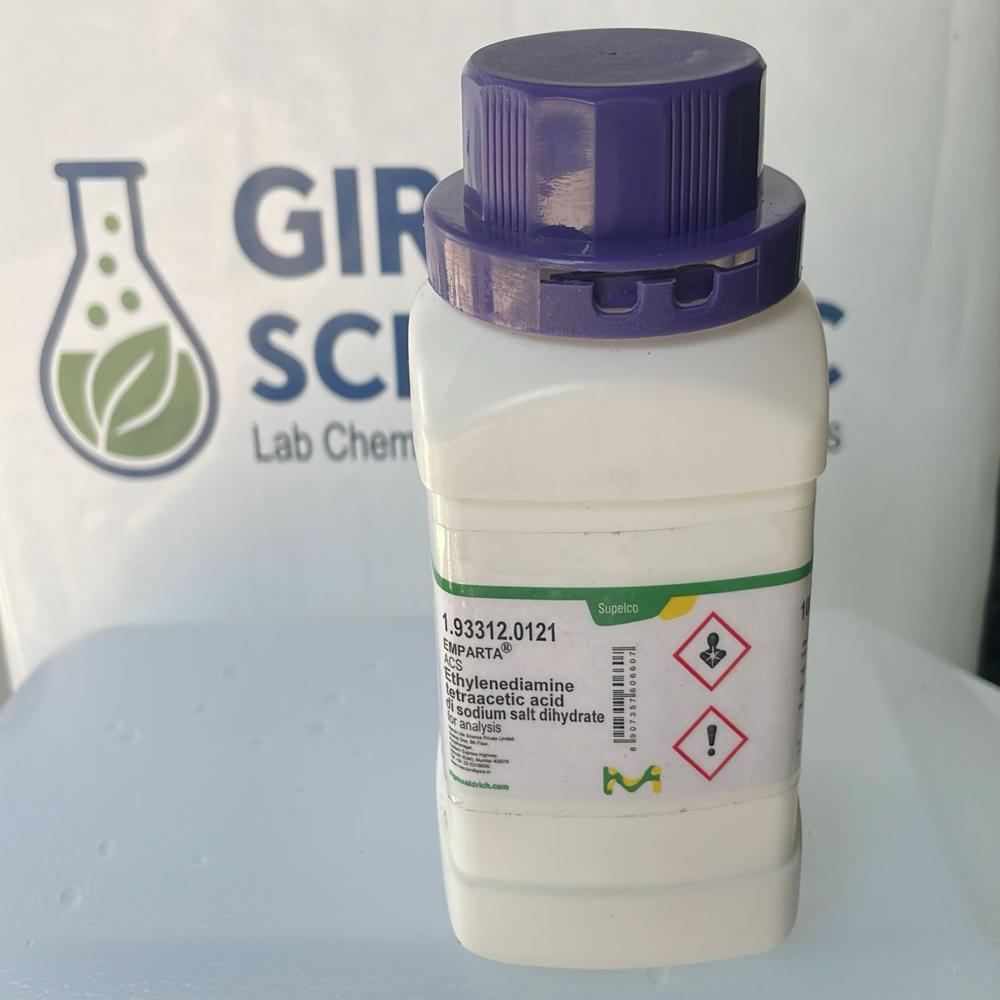
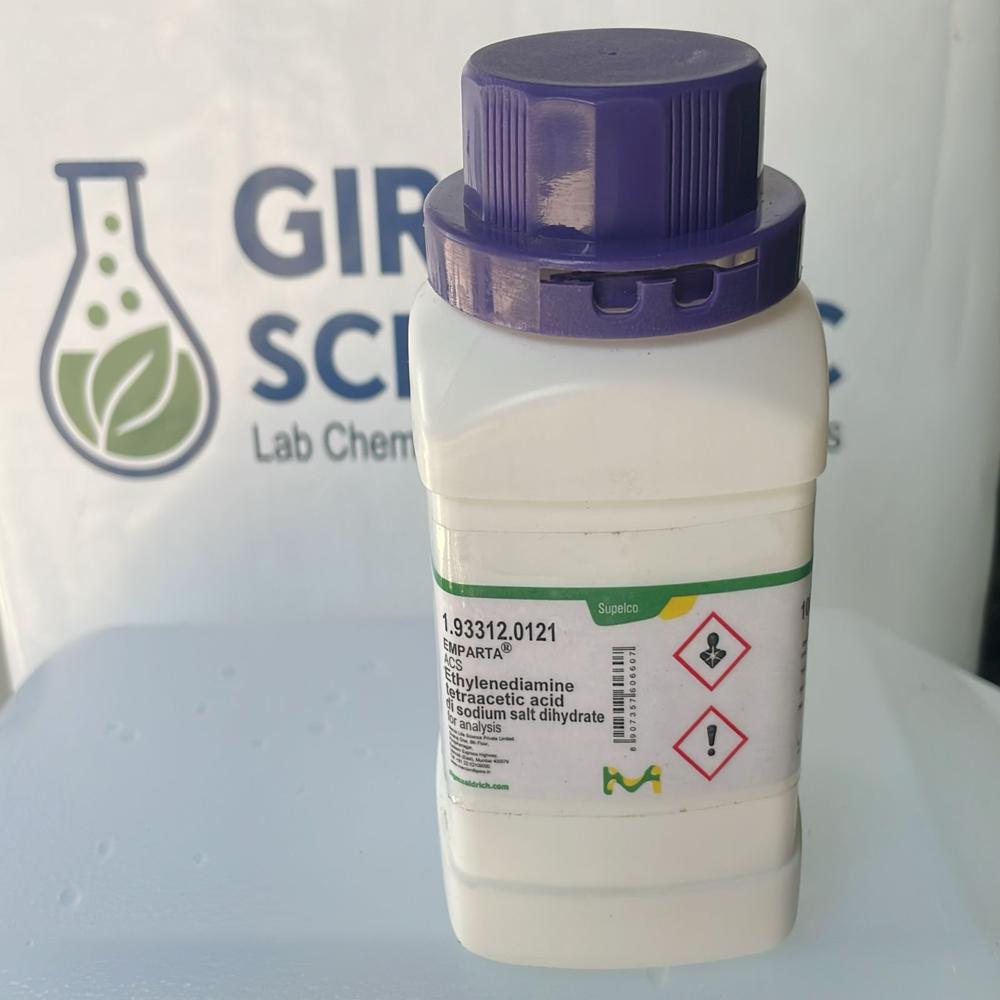
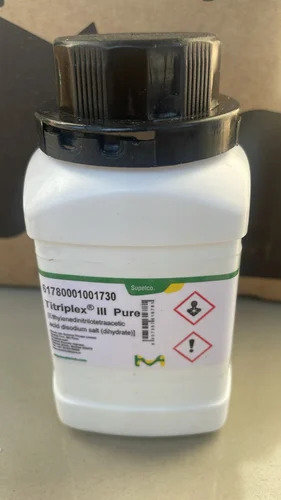
About ethylenediamine tetraacetic acid disodium salt dihydrate
(EDTA) disodium salt dihydrate is a versatile chelating agent primarily used to bind metal ions in aqueous solutions. It is widely utilized in molecular biology, clinical testing, medicine, and industrial manufacturing to inhibit metal-dependent enzymes, stabilize samples, and treat heavy metal toxicity..
Versatile Chelating Agent for Industrial UseEDTA disodium salt dihydrate is prized in industries for its robust ability to bind metal ions, ensuring effective sequestering and chelating properties. Its appearance as a white, odorless powder and impressive purity (>99%) make it ideal for various critical applications, such as laboratory analyses, water purification, pharmaceuticals, and photographic processing. The product is stable when stored correctly, allowing for a long shelf life and consistent, reliable performance.
Safe Handling and Long-Term StabilityThis chemical is classified as non-hazardous, making it safe to handle using standard safety precautions. Its heavy metal and lead content are kept below 10 ppm, ensuring product integrity even in sensitive applications. Thanks to its moisture content of 13-15%% and its decomposition temperature above 300C, EDTA disodium salt exhibits excellent thermal stability and will maintain effectiveness during prolonged storage.
FAQ's of ethylenediamine tetraacetic acid disodium salt dihydrate:
Q: How should EDTA disodium salt dihydrate be stored for optimal stability?
A: Store EDTA disodium salt dihydrate in a cool, dry area, within tightly sealed containers. Proper storage ensures it retains its stability and effectiveness throughout its 36-year shelf life.
Q: What are the main applications of this product in various industries?
A: This compound is extensively used as a chelating and sequestering agent in laboratories, water treatment plants, pharmaceutical formulations, and photographic processes, where it binds and neutralizes unwanted metal ions.
Q: When is customized packaging available for EDTA disodium salt dihydrate?
A: Customized packaging is offered based on the client's requirements and is available in options such as bags or drums, making it convenient for different business needs.
Q: Where does the benefit of using EDTA disodium salt in water treatment lie?
A: EDTA dihydrate efficiently removes or inactivates dissolved metal ions in water, preventing scaling, corrosion, and interference in water processes. This improves water quality and system longevity.
Q: What is the process by which EDTA disodium salt functions as a chelating agent?
A: As a chelating agent, EDTA forms stable complexes with metal ions, effectively neutralizing their reactivity. This process is crucial in applications that require metal ion control, such as pharmaceuticals, laboratories, and industrial cleaning.
Q: How does the high purity of this product enhance its performance in laboratory settings?
A: The >99% purity ensures minimal contamination risk, which is essential for precise analytical results, accurate experiments, and consistent product quality in laboratories and research settings.




 Send Inquiry


 Send Inquiry